AAC: The Silent Successor to MP3 That Powers the Modern Web
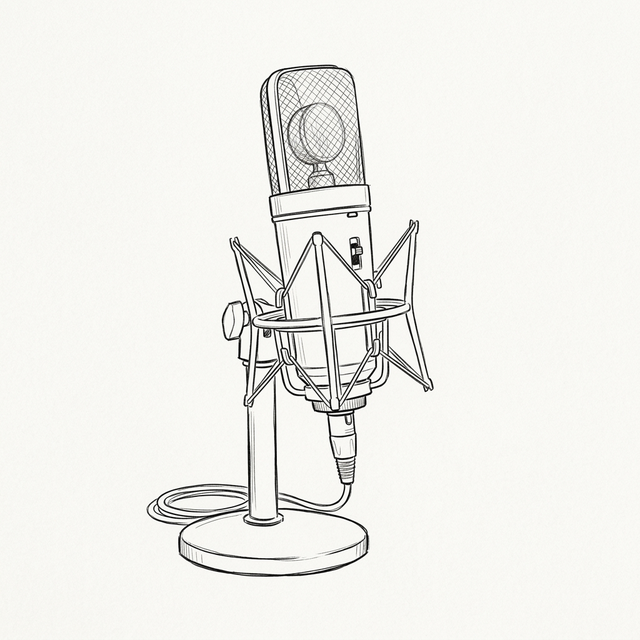
While everyone knows what an MP3 is, very few people talk about AAC (Advanced Audio Coding). Yet, if you’ve watched a video on YouTube, bought a song on iTunes, or streamed a movie on Netflix, you’ve used AAC. Designed to be the successor to the MP3, AAC is more efficient, more flexible, and technically superior in almost every measurable way. Let’s peel back the layers and see why AAC is the silent king of modern digital media.
Better Math, Better Sound
The primary advantage of AAC lies in its "Filterbank." MP3 uses a hybrid filterbank that is somewhat rigid and prone to artifacts. AAC uses the **MDCT (Modified Discrete Cosine Transform)** with much more flexible block lengths. This allows AAC to handle complex, "transient" sounds (like a snare drum hit or a glockenspiel) much more accurately than MP3 at the same bitrate. In blind listening tests, a 128kbps AAC file typically beats a 128kbps MP3 every time. In fact, most experts agree that 128kbps AAC is virtually indistinguishable from the original CD source for 99% of listeners.
Sample Rate and Channel Support
MP3 is limited to a maximum of 48kHz and 2 channels (stereo). AAC is a monster in comparison. It supports sample rates up to 96kHz and can handle up to **48 channels** of audio. This makes it the standard for "Surround Sound" in movies (5.1 and 7.1 audio). If you are building a modern web application that requires spatial audio or multi-channel data, MP3 isn't even an option. AAC is the foundation upon which these immersive experiences are built.
Efficiency and Storage
Because AAC is more efficient, you can achieve the same "perceived" quality as an MP3 using 30% less storage space. In the world of mobile data and limited cloud storage, this 30% adds up to billions of dollars in saved bandwidth for companies like Google and Netflix. This efficiency is also why Bluetooth audio (via the AAC codec) sounds remarkably better than older SBC connections. By using our **Online Converter** to transcode your raw PCM masters into M4A (the container for AAC), you are providing your audience with the highest possible quality for their device’s storage capacity.
Conclusion
The MP3 may have the name recognition, but AAC has the power. It is the professional choice for distribution. On **audio-converters**, we utilize high-quality AAC encoders that respect the intricate psychoacoustic models required for a clean export. Whether you're exporting for mobile apps or pro video editing, AAC is the bridge between file size and fidelity.
Thanks for reading our technical deep-dive!